

New Conversation
We typically reply in a few minutes
evaluates the macroscopic properties of a urine sample, including color, clarity, odor, and concentration (specific gravity) measures the concentration of particles (salts, minerals, waste) in urine...
This profile includes 26 tests. Compare prices from 1 NABL-certified labs and book with the one that fits your budget.
Fasting is not required for this profile.
Each test below is collapsed for easy browsing. Click to expand.
evaluates the macroscopic properties of a urine sample, including color, clarity, odor, and concentration (specific gravity)
measures the concentration of particles (salts, minerals, waste) in urine compared to pure water, typically ranging from 1.005 to 1.030
the presence of excess protein (specifically albumin) in the urine, indicating that the kidneys' filtering units (glomeruli) are damaged or not functioning correctly
measures the amount of sugar in a urine sample to screen for or monitor conditions like diabetes, where levels are normally zero or very low (0–15 mg/dL)
refers to the presence of conjugated bilirubin in urine, which is normally absent in healthy individuals
A Urine Ketones (Random) test measures the concentration of ketone bodies in a single urine sample to determine if the body is breaking down fat for energy instead of glucose
Centrifuged sediment wet mount microscopy is a diagnostic procedure analyzing concentrated insoluble elements in urine, such as cells, casts, crystals, and microorganisms
The appearance test in a complete urinalysis evaluates the color and clarity of the specimen to identify potential metabolic or pathological issues. It typically describes the sample using terms like "straw to amber" for color and "clear to turbid" for transparency.
The bacteria test uses microscopic examination to identify the presence of microorganisms in the urine sediment, which may indicate a urinary tract infection (UTI). Results are typically reported qualitatively (e.g., "None," "Few," or "Many") to help determine the severity of a potential bacterial colonization.
The urine blood test, or hematuria test, uses a chemical dipstick and microscopic review to detect red blood cells, hemoglobin, or myoglobin. Its presence can indicate a wide range of conditions, such as physical exertion, kidney stones, inflammation, or urinary tract infections.
The urobilinogen test measures a byproduct of bilirubin breakdown to evaluate liver function and identify potential hemolytic disorders. Normal results show small amounts of this compound, while elevated levels can indicate liver disease or the excessive destruction of red blood cells.
The bile pigment test, primarily detecting bilirubin, identifies the presence of processed bile that has leaked into the urine due to liver or gallbladder dysfunction. Since bilirubin is not normally found in urine, its detection serves as an early indicator of conditions like hepatitis or bile duct obstruction.
The bile salt test, often performed via the Hay’s test, detects the presence of bile acids that have entered the urine due to obstructive jaundice. Their presence indicates a blockage in the biliary tract or liver dysfunction that prevents bile from flowing normally into the intestine.
The urine casts test identifies cylindrical structures formed in the kidney tubules, which are captured and examined under a microscope. These structures are composed of proteins and cellular debris, and their specific type (such as hyaline, granular, or cellular) can indicate different types of kidney disease or damage.
The urine color test is a visual assessment of a specimen's pigmentation, which typically ranges from pale yellow to deep amber depending on concentration. Variations in color can provide immediate clues regarding hydration levels, dietary intake, medication use, or underlying conditions like liver disease or internal bleeding.
The urine crystals test uses microscopic analysis to identify solid mineral deposits that form when urine becomes oversaturated with certain chemicals. Their presence and specific shape can indicate a risk for kidney stones, metabolic disorders, or the effects of certain medications
The leukocyte esterase test is a chemical dipstick screening that detects an enzyme produced by white blood cells, indicating their presence in the urine. A positive result serves as a primary marker for inflammation or infection within the urinary tract, such as a UTI.
The urinary leucocytes (pus cells) test involves a microscopic examination to count the number of white blood cells present in a urine sample. An elevated count, known as pyuria, is a definitive sign of an immune response to infection, inflammation, or injury within the renal or urinary systems.
The urine mucus test involves a microscopic examination to detect the presence of thread-like protein structures produced by the urinary tract lining. While small amounts are often normal, excessive mucus can indicate irritation, inflammation, or an underlying urinary tract infection.
The urine parasite test is a microscopic examination used to detect the presence of parasitic organisms or their eggs, such as Schistosoma haematobium or Trichomonas vaginalis, within the urinary tract. It is primarily used to diagnose infections or infestations that cause symptoms like bloody urine or irritation, often requiring a midday sample when parasite shedding is at its peak.
The urine PH test measures the level of acidity or alkalinity in your urine to help monitor metabolic balance and kidney function.It is primarily used to identify risks for kidney stones or urinary tract infections, as extreme pH levels can encourage the formation of specific crystals or bacterial growth.
The Red Blood Cell (RBC) urine test, often part of a standard urinalysis, measures the number of red blood cells in a urine sample to detect hidden (microscopic) or visible bleeding in the urinary tract. It helps identify underlying issues such as infections, kidney stones, or inflammation by identifying [3 or more] RBCs per high-power field (HPF) as abnormal, signaling the need for further medical evaluation.
The Volume Test specifically measures the total quantity of urine produced often over a 24-hour period to assess fluid balance, kidney filtration efficiency, and the presence of conditions like polyuria or oliguria.
A Yeast Test within a urinalysis involves a microscopic examination to detect fungal elements like Candida spores or hyphae in the urine sediment. It is primarily used to diagnose fungal urinary tract infections or to identify contamination from a secondary vaginal yeast infection.
The nitrite test is a rapid screen that detects nitrites produced when specific bacteria (like E. coli) convert nitrates in the urine, serving as a strong indicator of a Urinary Tract Infection (UTI). A positive result suggests a bacterial infection is present, while a negative result is normal but does not entirely rule out infection if the bacteria are low-level or non-nitrate-reducing.
The Epithelial Cells test in a urine analysis identifies cells shed from the lining of the urinary tract to assess for inflammation, infection, or kidney conditions. A small number is typically normal, but elevated levels may indicate a potential medical issue or sample contamination.
Select city to view labs/clinics.
✅ Free home sample collection in all cities
✅ NABL & NABH certified lab partners
✅ Full refund if cancelled before sample collection
✅ Reports delivered on WhatsApp & Email
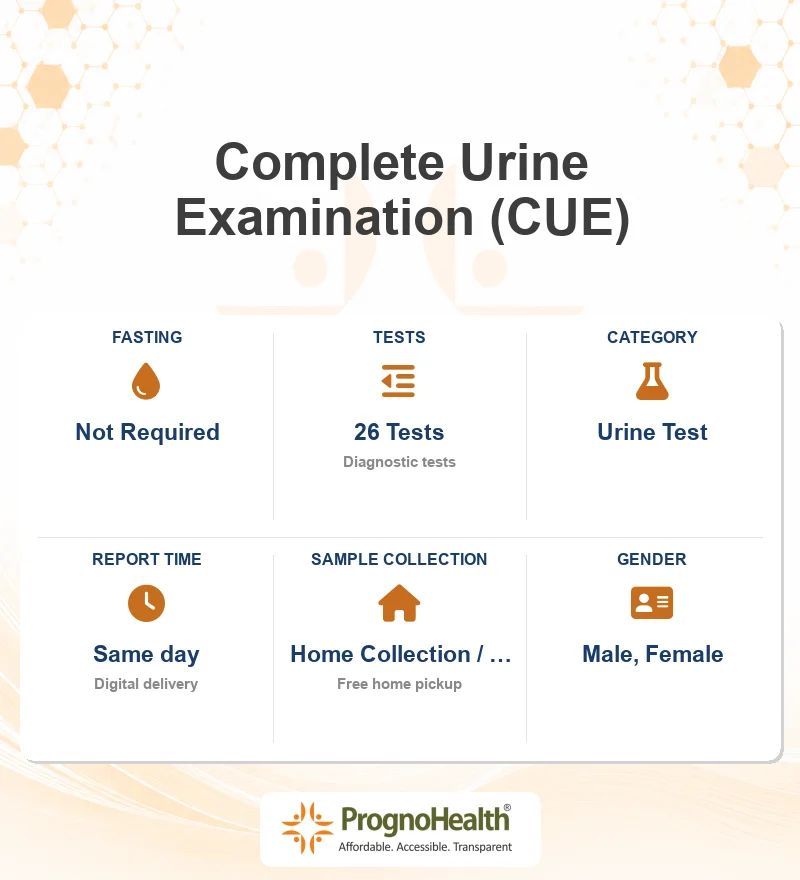
The Complete Urine Examination (CUE) is a urine test package comprising 26 tests designed for male, female. It helps in early detection and monitoring of health conditions through a comprehensive set of diagnostic tests. Book from NABL-certified labs starting at just ₹200.
evaluates the macroscopic properties of a urine sample, including color, clarity, odor, and concentration (specific gravity) measures the concentration of particles (salts, minerals, waste) in urine compared to pure water, typically ranging from 1.005 to 1.030 the presence of excess protein (specifically albumin) in the urine, indicating that the kidneys' filtering units (glomeruli) are damaged or not functioning correctly measures the amount of sugar in a urine sample to screen for or monito...
Step 1: Choose your preferred NABL-certified lab and select your appointment date.
Step 2: A trained phlebotomist visits your home at your chosen time for sample collection — completely free.
Step 3: Receive your detailed digital reports within Same day on WhatsApp and email.
This profile follows ICMR (Indian Council of Medical Research) guidelines for diagnostic testing. All tests are conducted at NABL and NABH accredited laboratories with internationally calibrated equipment.
Medically reviewed by the PrognoHealth Clinical Advisory Team
Verified reviews from customers who booked Complete Urine Examination (CUE) with PrognoHealth.
Everything you need to know about Complete Urine Examination (CUE).
Cost free sample pickup from Home or Office.
Cancel before collection — full refund within 24 hours.
Reschedule appointment — no charges levied.
 A-Z Diseases
 Corporate Health & Wellness