


New Conversation
We typically reply in a few minutes
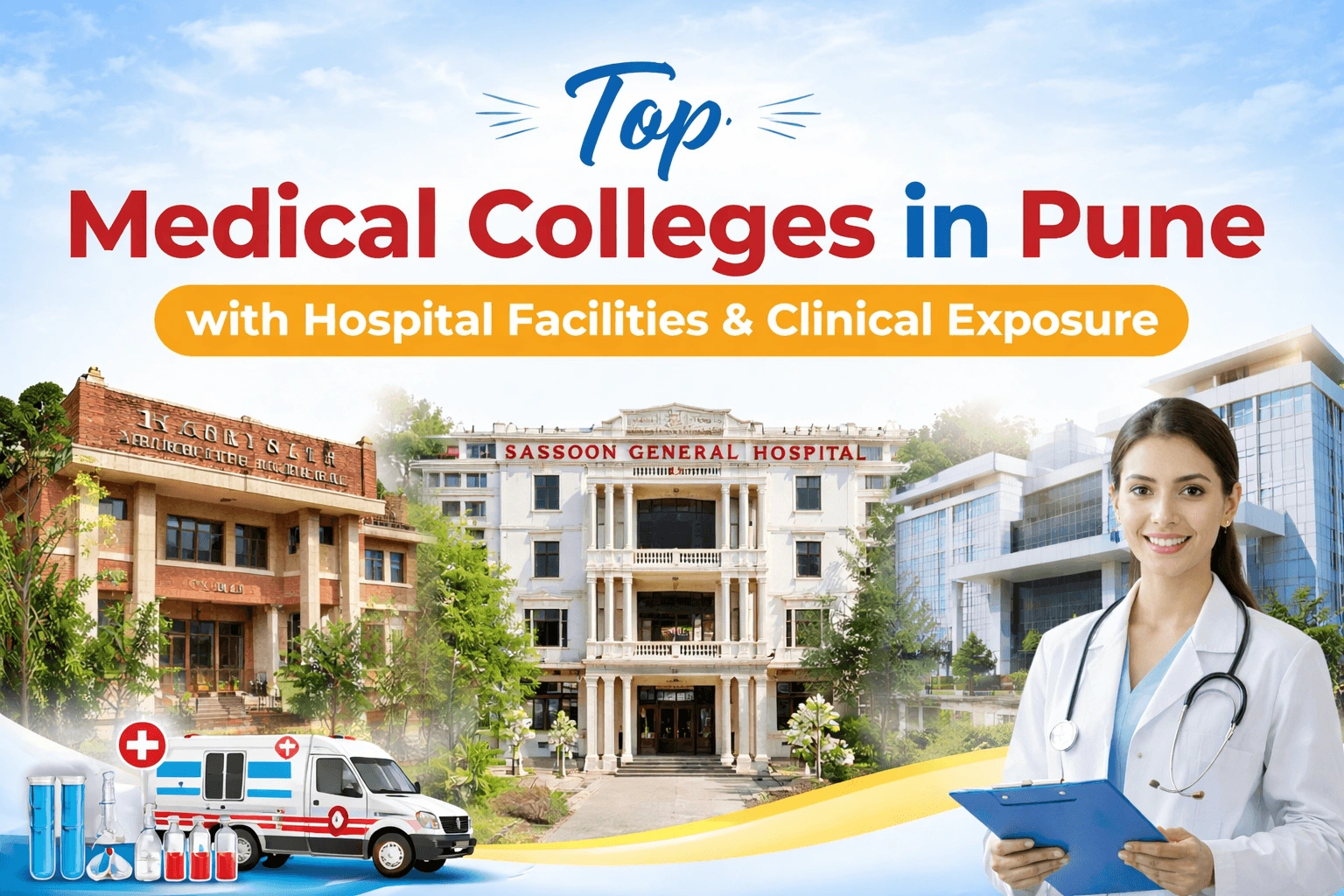
Pune has steadily grown into one of the most respected medical education destinations in India. Known widely as the "Oxford of the East," the city brings together academic rigour, advanced healthcare infrastructure, and a clinical learning environment that few cities can match.
For students preparing to build careers in medicine, choosing a college that provides direct access to hospital facilities and real-patient clinical exposure can shape every aspect of their professional journey. The strength of a teaching hospital — its diagnostic capabilities, patient volume, and spectrum of clinical services — determines how prepared a graduate will be to practise independently.
This guide examines the leading medical colleges in Pune, focusing specifically on what matters most during training — hospital infrastructure, diagnostic facilities, patient volume, specialty departments, and the depth of clinical exposure each institution provides.
Before diving into individual institutions, it is worth understanding why Pune consistently ranks among the preferred cities for medical studies in India.
Affiliated Hospital: Command Hospital (Southern Command), Pune
Established in 1948, AFMC is one of India's most prestigious medical institutions. It operates under the Indian Armed Forces and maintains exceptionally high standards in both academic training and clinical practice. Admission is through the NEET-UG examination followed by a dedicated AFMC screening process that evaluates candidates on personality, aptitude, and physical fitness.
Command Hospital (Southern Command) is one of the largest military hospitals in Asia, with over 1,000 beds across general and specialty wards. The hospital features:
Students at AFMC benefit from a structured clinical rotation system that begins in the second year. The military hospital setting brings in cases from across the country, including personnel and families from all service branches. This results in a high patient turnover and significant case diversity.
Students participate directly in ward management, outpatient departments, surgical assists, and emergency duties. They are trained to order and interpret diagnostic investigations — from basic complete blood count (CBC) tests to advanced imaging — as part of clinical decision-making. Field postings during training add a dimension of community health experience that civilian institutions rarely replicate.
Affiliated Hospital: Sassoon General Hospital, Pune
B.J. Government Medical College, established in 1878, is one of the oldest medical institutions in India. It carries a legacy of over 140 years in medical education and remains the most sought-after government medical college in Pune. Admission is through NEET-UG counselling.
Sassoon General Hospital serves as the primary teaching hospital and is the largest public hospital in Pune, with a bed strength exceeding 1,300 beds. Key facilities include:
Being a government hospital, Sassoon handles an enormous patient load daily — often exceeding 3,000 outpatients and maintaining near-full bed occupancy at all times. For medical students, this translates to unmatched hands-on experience.
Undergraduate students are involved in history-taking, clinical examination, bedside procedures, minor surgical assists, and active participation in labour room duties. Students learn to correlate clinical findings with laboratory results, interpreting everything from routine blood work and liver function tests to complex imaging findings. The medico-legal and forensic caseload at Sassoon is among the highest in Maharashtra, offering exposure that is difficult to find elsewhere.
Postgraduate students take on significant clinical responsibility, often managing wards and emergency duties with supervised independence.
Affiliated Hospital: Dr. D.Y. Patil Hospital & Research Centre, Pimpri
Part of the Dr. D.Y. Patil Vidyapeeth (a Deemed University accredited with NAAC 'A++' grade), this institution has built a strong reputation in private medical education. It is recognised by the National Medical Commission (NMC) and offers MBBS, MD, MS, and super-specialty programmes.
Dr. D.Y. Patil Hospital is a 1,500+ bed multi-specialty and super-specialty hospital with modern infrastructure. Highlights include:
The hospital draws a significant patient population from the Pimpri-Chinchwad industrial belt, resulting in diverse clinical cases including occupational health conditions, industrial injuries, and lifestyle-related diseases. Students are exposed to a wide range of diagnostic procedures — from routine blood tests and thyroid function tests to advanced imaging like PET-CT and cardiac catheterisation — as part of their clinical rotations.
Students rotate through all major departments and are encouraged to participate in research projects, clinical audits, and case presentations. The institution runs rural health centres and community outreach programmes where students gain primary healthcare and preventive medicine experience, including participation in community-level health screening camps.
Affiliated Hospital: Bharati Hospital & Research Centre, Pune
Bharati Vidyapeeth Medical College is a well-established private medical institution under the Bharati Vidyapeeth Deemed University. It holds NMC recognition and has been a consistent performer in medical education for over three decades. The college offers undergraduate and postgraduate medical programmes with an emphasis on integrated clinical training.
Bharati Hospital is a 1,100+ bed tertiary care hospital equipped with:
Bharati Hospital maintains a strong patient inflow from Pune city and surrounding rural areas. The medical college runs multiple rural health training centres where students complete their community medicine postings, often conducting preventive health assessments and basic diagnostic screenings in underserved communities.
Clinical rotations are structured to progressively build patient interaction skills, starting with observation in early clinical years and moving toward active patient management in the final year and internship. The hospital's multi-specialty nature allows students to experience a wide range of procedures and clinical decision-making scenarios.
Affiliated Hospital: Symbiosis University Hospital & Research Centre (SUHRC)
A relatively newer entrant in Pune's medical education landscape, Symbiosis Medical College for Women was established under Symbiosis International (Deemed University). The college exclusively admits women students and has quickly gained recognition for its curriculum design, mentoring approach, and modern infrastructure. Admission is through the Symbiosis Entrance Test (SET) followed by NEET-UG qualification.
The Symbiosis University Hospital is a modern facility with 1,000+ bed capacity, featuring:
The college integrates early clinical exposure from the first year, allowing students to interact with patients and observe clinical workflows well before traditional clinical postings begin. Students gain early familiarity with diagnostic ordering and interpretation, learning how investigations such as blood panels, imaging studies, and specialised tests inform clinical decisions.
The simulation centre plays a significant role in training, enabling students to practice procedures on high-fidelity mannequins and virtual platforms before working with real patients. Community health postings extend to adopted villages and urban primary health centres, giving students a grounded understanding of public health challenges in the region.
Affiliated Hospital: Smt. Kashibai Navale Medical College General Hospital, Narhe
Established under the Sinhgad Technical Education Society, SKNMC has built a steady reputation among private medical colleges in Pune. It is recognised by the NMC and affiliated to Maharashtra University of Health Sciences (MUHS), Nashik.
The attached general hospital has a bed strength of 1,100+ beds and provides:
The hospital is located in an area that serves a mix of urban and peri-urban populations, resulting in a good variety of clinical presentations. Students are actively involved in outpatient departments, ward duties, casualty rotations, and rural health centre postings. The emphasis on building core clinical skills — history-taking, physical examination, basic procedures, and clinical reasoning — aligns with the competency-based medical education (CBME) framework adopted by the NMC.
Affiliated Hospital: Dr. D.Y. Patil Hospital, Sant Tukaram Nagar, Pimpri
This is a separate institution from the D.Y. Patil Vidyapeeth campus, operating under a different trust but sharing the D.Y. Patil name. It is affiliated to MUHS, Nashik, and is NMC-recognised. The college provides MBBS and select postgraduate programmes.
The attached hospital offers 800+ beds with departments covering:
Students benefit from the hospital's location within the Pimpri-Chinchwad municipal area, which provides a consistent flow of patients from industrial and residential communities. Clinical training follows the MUHS-prescribed curriculum with rotations across all departments and mandatory rural postings.
Choosing the right medical college involves looking beyond rankings and fee structures. Here are specific factors students should assess when evaluating the clinical training component:
A hospital may have 1,000 beds, but if the average occupancy is low, students will have fewer opportunities for patient interaction. Ask about average bed occupancy rates rather than just total bed capacity.
High outpatient volumes mean more chances to see diverse clinical conditions, practice history-taking, and develop differential diagnosis skills. Government-affiliated hospitals typically have the highest footfall.
Colleges attached to hospitals that serve as trauma centres or referral centres for emergencies provide stronger surgical and acute care training. Check whether the hospital is a designated trauma centre.
A teaching hospital's diagnostic capabilities directly impact student learning. Hospitals with comprehensive in-house laboratories, advanced imaging suites, and point-of-care testing facilities allow students to understand the full diagnostic workflow — from ordering a test to interpreting results and integrating findings into treatment plans. Exposure to modern diagnostic processes, including automated pathology systems and digital radiology, prepares graduates for contemporary clinical practice.
A hospital with a wide range of departments — including super-specialties like cardiothoracic surgery, neurosurgery, medical oncology, and nephrology — exposes students to advanced clinical practice during their training years.
Modern medical training increasingly uses simulation-based learning. Colleges that invest in clinical skills labs, simulation centres, and virtual patient platforms provide a safer learning environment for mastering procedures before real-patient application.
Strong community medicine departments with active rural and urban health centres give students essential public health and preventive medicine experience. This is critical for understanding healthcare delivery beyond the hospital setting, including how preventive health checkups and early diagnostic screenings reduce disease burden at the population level.
Smaller batch sizes during clinical rotations mean more personalised teaching, more time with each patient, and better mentorship. Ask about the number of students per clinical group during ward rounds and OPD postings.
| Institution | Hospital | Bed Strength | Type | Key Strengths |
|---|---|---|---|---|
| AFMC | Command Hospital | 1,000+ | Government (Military) | National case diversity, field training, disciplined clinical environment |
| B.J. Government Medical College | Sassoon General Hospital | 1,300+ | Government | Highest patient volume, medico-legal exposure, comprehensive training |
| D.Y. Patil Medical College (Vidyapeeth) | D.Y. Patil Hospital, Pimpri | 1,500+ | Private (Deemed University) | Super-specialty access, robotic surgery, transplant programme |
| Bharati Vidyapeeth Medical College | Bharati Hospital | 1,100+ | Private (Deemed University) | Multi-specialty training, cancer centre, rural health outreach |
| Symbiosis Medical College for Women | SUHRC | 1,000+ | Private (Deemed University) | Modern simulation labs, early clinical exposure, digital infrastructure |
| SKNMC | SKNMC General Hospital | 1,100+ | Private | Strong core clinical training, CBME-aligned approach |
Hospital infrastructure directly influences the quality of clinical training. Students who train in hospitals with advanced diagnostic equipment learn to correlate clinical findings with imaging and lab results more effectively. Those who work in high-volume emergency departments develop confidence in acute care management. Exposure to super-specialty departments during undergraduate training often guides career decisions for postgraduate specialisation.
Pune's medical colleges collectively offer a rare combination — ranging from the high-volume, resource-constrained government hospital environment at Sassoon to the technology-rich private setups at institutions like D.Y. Patil and Symbiosis. Students gain different but equally valuable skills depending on where they train, and many clinicians who trained in Pune credit this diversity for their well-rounded clinical abilities.
These hospitals not only train students but also serve thousands of patients daily, offering diagnostic and preventive healthcare services that benefit the wider community. The intersection of medical education and patient care creates a continuous learning loop — better-trained doctors deliver better healthcare, and robust hospital systems provide better training grounds for students.
Pune's position as a medical education hub is inseparable from its broader healthcare ecosystem. The city's teaching hospitals function as major diagnostic and treatment centres for the entire western Maharashtra region, handling everything from basic screening tests to complex interventional procedures.
Every teaching hospital listed in this guide operates dual functions — training the next generation of doctors while simultaneously providing clinical care to large patient populations. This creates a direct link between medical education quality and public health outcomes. When a hospital invests in a new MRI suite or upgrades its pathology laboratory, both patients and students benefit.
Modern medicine relies heavily on accurate and timely diagnostics. A significant portion of clinical decision-making — estimated at over 70% of treatment decisions — is influenced by diagnostic test results. In Pune's teaching hospitals, students witness this firsthand:
Beyond the teaching hospital setting, Pune has a well-developed network of diagnostic centres and healthcare facilities that serve the general population. Residents and visitors can access a full spectrum of diagnostic services — from full body checkup packages to specific investigations — through both hospital-based and standalone diagnostic centres across the city.
This robust diagnostic infrastructure benefits medical students indirectly as well, since patients often arrive at teaching hospitals with prior investigation reports, teaching students how to evaluate external diagnostic data and integrate it into their clinical assessment.
Pune's healthcare infrastructure extends well beyond medical education. The city offers a comprehensive range of preventive health services for individuals looking to monitor their wellbeing proactively. Whether you are a student, working professional, or senior citizen, periodic health assessments play a key role in early detection and disease prevention.
A full body checkup typically includes a combination of blood investigations, imaging, cardiac evaluation, and organ function assessments. It provides a baseline health snapshot and helps identify risk factors for conditions such as diabetes, cardiovascular disease, liver disorders, and kidney dysfunction before symptoms appear.
Regular blood investigations form the foundation of preventive healthcare. Key tests include:
Preventive health packages bundle multiple tests into a single assessment, designed for different age groups and risk profiles. These packages are particularly valuable for:
Early detection through structured health checkups has been shown to significantly improve treatment outcomes and reduce long-term healthcare costs. Pune's healthcare ecosystem — anchored by its teaching hospitals and supported by a network of diagnostic service providers — makes preventive health assessments widely accessible.
Selecting a medical college is one of the most consequential decisions in a healthcare professional's career. While entrance exam scores often determine the available options, students who have a choice should give serious weight to the clinical training environment.
Visit the hospitals during open days or campus tours. Speak with current students and recent graduates about their clinical posting experiences. Look at the range of cases the hospital handles, the diagnostic infrastructure it offers, and the teaching methodology it follows — not just its physical appearance. A well-maintained hospital with strong clinical departments, modern diagnostic capabilities, and committed teaching faculty will shape you into a competent, confident physician — regardless of whether it carries a government or private tag.
Pune, with its established medical education ecosystem, advanced healthcare infrastructure, and diverse patient population, remains one of the strongest cities in India for building a solid clinical foundation.
Disclaimer: The information in this article is compiled from publicly available sources and institutional data as of 2026. Admission processes, fee structures, and hospital facilities are subject to change. Students are advised to verify details directly with the respective institutions and refer to the National Medical Commission (NMC) website for the latest recognition status.
B.J. Government Medical College, through its affiliated Sassoon General Hospital, handles the highest patient volume in Pune. The hospital serves over 3,000 outpatients daily and maintains near-full bed occupancy across its 1,300+ beds, making it the busiest teaching hospital in the city.
Clinical exposure quality depends on patient volume, case diversity, and teaching structure. Sassoon General Hospital (B.J. Medical College) offers the highest volume, while AFMC's Command Hospital provides national-level case diversity. D.Y. Patil Hospital (Vidyapeeth) offers the widest super-specialty exposure. The best choice depends on what type of clinical training a student prioritises.
Diagnostic facilities are central to medical training. Over 70% of clinical decisions are influenced by diagnostic results. Students trained in hospitals with comprehensive laboratory and imaging infrastructure develop stronger skills in test selection, result interpretation, and evidence-based clinical reasoning — abilities that are fundamental to competent medical practice.
There is no fixed number, but institutions where students regularly interact with patients across diverse clinical conditions produce better-trained graduates. A teaching hospital with high OPD footfall (1,000+ daily), busy emergency departments, and near-full ward occupancy ensures that each student gets sufficient hands-on experience during clinical rotations.
Both government and private medical colleges in Pune offer strong clinical training, but with different strengths. Government hospitals like Sassoon provide unmatched patient volume and medico-legal exposure. Private institutions like D.Y. Patil and Bharati Vidyapeeth offer more modern infrastructure, super-specialty access, and research opportunities. Students benefit from either environment when the teaching structure is well-organised.
Yes, several institutions now integrate early clinical exposure in line with the NMC's competency-based medical education (CBME) framework. Symbiosis Medical College for Women, for example, begins patient interaction from the first year. Most colleges now include clinical observership and community visits from the pre-clinical phase, helping students connect theoretical knowledge with real patient care earlier in their training.
Preventive health screenings are an integral part of community medicine training. Students participate in health camps, screening drives, and rural health centre postings where they conduct basic health assessments, identify risk factors, and counsel patients on lifestyle modifications. This experience builds skills in population health management and early disease detection — competencies increasingly valued in modern healthcare.