

New Conversation
We typically reply in a few minutes
A silver blood test measures the concentration of silver in the body to detect acute or chronic overexposure, often from industrial work or certain supplements. Excessive levels can lead to argyria, a...
This profile includes 22 tests. Compare prices from 1 NABL-certified labs and book with the one that fits your budget.
Fasting is not required for this profile.
Each test below is collapsed for easy browsing. Click to expand.
A silver blood test measures the concentration of silver in the body to detect acute or chronic overexposure, often from industrial work or certain supplements. Excessive levels can lead to argyria, a permanent condition where the skin and eyes take on a distinct blue-gray tint.
An aluminum blood test measures levels of the metal to monitor potential toxicity, which can lead to neurological issues or bone disease if not properly filtered by the body. It is most commonly used for patients with impaired kidney function or those exposed to aluminum through industrial environments or long-term intravenous nutrition.
An arsenic blood test is primarily used to detect very recent exposure, as arsenic is rapidly cleared from the bloodstream within a few hours to days. For a more comprehensive look at chronic exposure, physicians typically prefer a 24-hour urine collection to measure total arsenic excretion.
A barium blood test measures the concentration of the metal to identify acute toxicity or overexposure, often from industrial manufacturing or contaminated water. While barium is used medically in "barium meals" for imaging, elevated levels from other sources can cause muscle weakness and heart rhythm disturbances.
A beryllium blood test is primarily used to detect occupational exposure or sensitivity, often screening for Beryllium Sensitization (BeS) in industrial workers. High levels can indicate a risk for Chronic Beryllium Disease (CBD), a serious inflammatory condition that primarily affects the lungs.
A bismuth blood test evaluates the concentration of the metal in the body to monitor for toxicity, which can occur from chronic use of bismuth-containing medications. Elevated levels can lead to bismuth encephalopathy, characterized by symptoms like confusion, tremors, and coordination issues.
A cadmium blood test is used to detect recent or ongoing exposure, which can lead to kidney damage and bone density loss over time. It is a critical tool for monitoring industrial workers and smokers, as the body absorbs cadmium more readily from inhalation than from food.
A cobalt blood test is primarily used to monitor wear in metal-on-metal joint implants or to detect industrial overexposure in manufacturing settings. Elevated levels can lead to symptoms like cardiomyopathy, thyroid issues, and neurological changes if left untreated.
A chromium blood test is used to detect industrial overexposure or to monitor the wear of metal-on-metal medical implants, such as hip replacements. Elevated levels can be toxic, potentially causing respiratory issues, skin irritation, and increased risk of kidney or liver damage.
A caesium blood test is used to identify acute exposure to this alkali metal, which can occur through industrial accidents or contaminated food and water. While stable caesium is rarely toxic, testing is vital for assessing internal contamination and potential risks to the nervous and muscular systems.
A mercury blood test is used to detect recent exposure to methylmercury (from seafood) or metallic mercury, which can cause severe neurological and kidney damage. Since mercury is cleared from the blood within days, this test is most effective for identifying acute poisoning rather than long-term, chronic storage.
A manganese blood test measures levels of this essential mineral to detect industrial overexposure or potential toxicity, which can lead to "manganism," a condition resembling Parkinson’s disease. It is also used to monitor patients receiving long-term intravenous nutrition (TPN) to ensure they aren't accumulating dangerous amounts in the brain and liver.
A molybdenum blood test is primarily used to investigate rare cases of toxicity or deficiency, often in patients receiving long-term artificial nutrition or those with suspected industrial exposure. While it is an essential trace element for enzyme function, excessive levels can interfere with copper metabolism and lead to symptoms like joint pain or gout-like conditions.
A nickel blood test is used to identify toxicity from industrial exposure or to assess potential hypersensitivity and complications from nickel-containing medical implants. Excessive levels can lead to respiratory distress, skin dermatitis, and in chronic cases, increased risks to lung and nasal health.
A lead blood test is the gold standard for detecting recent or ongoing exposure to lead, a potent neurotoxin that can cause permanent developmental and cognitive damage. It is primarily used to screen children in high-risk areas and adults with industrial exposure to prevent long-term kidney, blood, and nervous system disorders.
An antimony blood test is used to detect acute exposure to this heavy metal, which is common in industrial manufacturing like plastics, glass, and flame retardants. Elevated levels are highly toxic and can lead to severe gastrointestinal distress, skin irritation, and potential damage to the heart and lungs.
A selenium blood test assesses levels of this essential trace element to detect either toxicity (selenosis) from over-supplementation or deficiency, which can weaken the immune system and heart. While vital for thyroid and antioxidant function, excessive levels can lead to hair loss, nail brittleness, and neurological damage.
A tin blood test is primarily used to detect industrial exposure or toxicity from organotin compounds, which can cause neurological issues and gastrointestinal distress. While inorganic tin is poorly absorbed, this test helps monitor those working in smelting, soldering, or chemical manufacturing to prevent chronic health complications.
A strontium blood test is used to monitor exposure to the element, often in industrial settings or during the use of certain bone-strengthening medications. While low levels are naturally present, excessive accumulation can interfere with calcium metabolism and potentially impact bone density and structure.
A thallium blood test is a critical diagnostic tool used to detect acute or chronic poisoning from this highly toxic heavy metal, which is often found in electronics manufacturing and pesticides. Excessive exposure can lead to severe neurological symptoms, hair loss, and multi-organ failure, making early detection through blood analysis essential for treatment.
A uranium blood test is primarily used to detect recent or high-level exposure to this radioactive metal, which can occur through industrial work or contaminated environmental sources. Because uranium is chemically toxic to the kidneys, this test is vital for monitoring renal health and preventing long-term systemic damage.
A vanadium blood test is used to detect overexposure to this metal, which is common in industries like steel manufacturing, chemical processing, and fossil fuel combustion. While essential in tiny amounts, high levels can be toxic, leading to respiratory irritation, "green tongue," and potential kidney or gastrointestinal damage.
Select city to view labs/clinics.
✅ Free home sample collection in all cities
✅ NABL & NABH certified lab partners
✅ Full refund if cancelled before sample collection
✅ Reports delivered on WhatsApp & Email
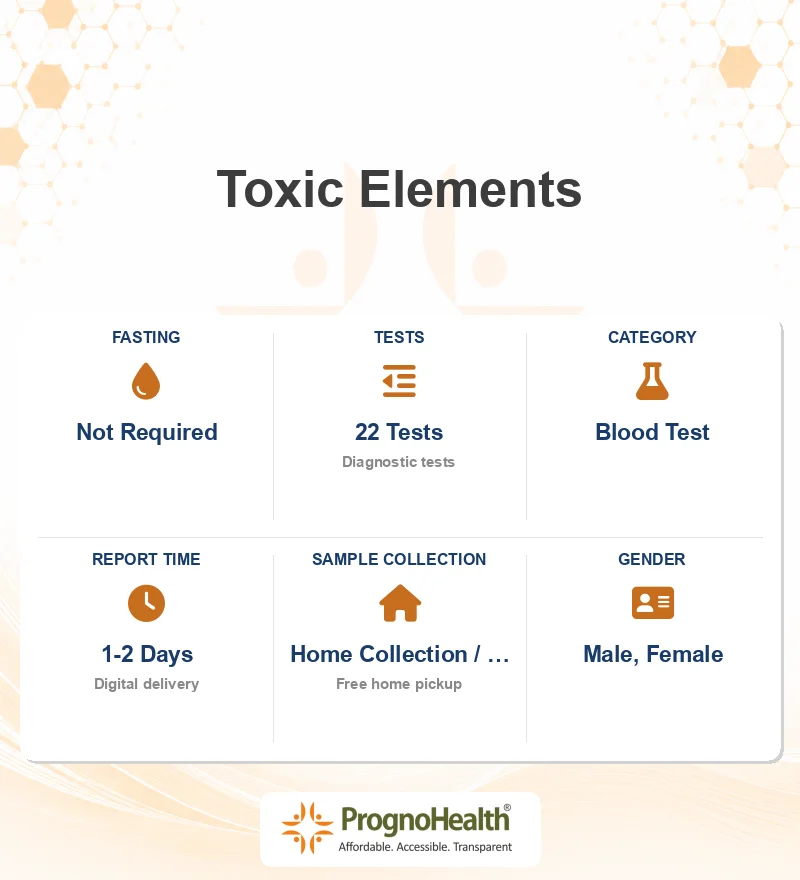
The Toxic Elements is a blood test package comprising 22 tests designed for male, female. It helps in early detection and monitoring of health conditions through a comprehensive set of diagnostic tests. Book from NABL-certified labs starting at just ₹2,400.
A silver blood test measures the concentration of silver in the body to detect acute or chronic overexposure, often from industrial work or certain supplements. Excessive levels can lead to argyria, a permanent condition where the skin and eyes take on a distinct blue-gray tint. An aluminum blood test measures levels of the metal to monitor potential toxicity, which can lead to neurological issues or bone disease if not properly filtered by the body. It is most commonly used for patients with i...
Step 1: Choose your preferred NABL-certified lab and select your appointment date.
Step 2: A trained phlebotomist visits your home at your chosen time for sample collection — completely free.
Step 3: Receive your detailed digital reports within 1 Day on WhatsApp and email.
This profile follows ICMR (Indian Council of Medical Research) guidelines for diagnostic testing. All tests are conducted at NABL and NABH accredited laboratories with internationally calibrated equipment.
Medically reviewed by the PrognoHealth Clinical Advisory Team
Verified reviews from customers who booked Toxic Elements with PrognoHealth.
Everything you need to know about Toxic Elements.
Cost free sample pickup from Home or Office.
Cancel before collection — full refund within 24 hours.
Reschedule appointment — no charges levied.
 A-Z Diseases
 Corporate Health & Wellness