


New Conversation
We typically reply in a few minutes
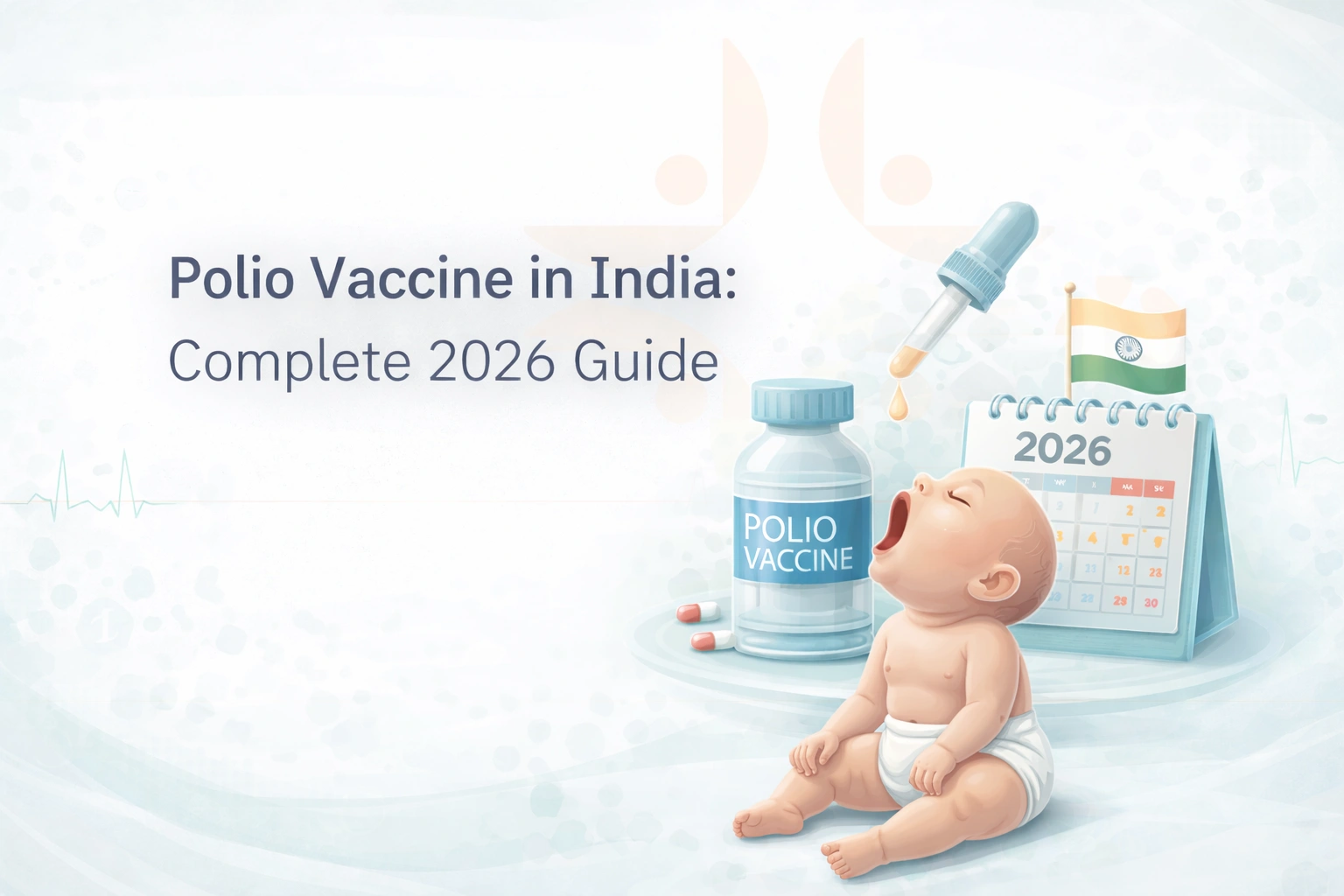
Polio (poliomyelitis) was once one of the most feared diseases in India, paralyzing thousands of children every year. After decades of relentless vaccination drives, India was declared polio-free by the World Health Organization (WHO) on March 27, 2014 — a milestone celebrated globally. Yet, the battle is far from over.
In 2026, India continues to face threats from imported poliovirus cases (via Afghanistan and Pakistan, which still report active transmission), vaccine-derived poliovirus (VDPV) in environmental surveillance, and immunization gaps in underserved communities. The Universal Immunization Programme (UIP) under the Ministry of Health and Family Welfare (MoHFW) remains the backbone of India’s defense.
This guide is your complete 2026 reference for everything related to polio vaccination in India — including updated schedules, the latest National Immunization Day (NID) dates by state and city, where to get vaccinated, costs, side effects, and myth-busting facts.
Polio is a highly infectious viral disease caused by the poliovirus (types 1, 2, and 3). It primarily targets children under 5 but can infect unvaccinated adults too. The virus spreads through:
| Severity | Symptoms |
|---|---|
| Mild (non-paralytic) | Fever, fatigue, sore throat, nausea, headache |
| Moderate | Stiff neck, back pain, muscle weakness |
| Severe (paralytic) | Irreversible limb paralysis, respiratory failure |
Critically: Up to 95% of infected people show no symptoms, silently spreading the virus in communities.
India has maintained its polio-free status for 12 years (since 2014). The last wild poliovirus case was reported on January 13, 2011, in West Bengal. However:
India’s UIP employs two types of polio vaccines, each serving a distinct purpose.
| Feature | Details |
|---|---|
| Type | Live attenuated (weakened) virus |
| Administration | 2 drops given orally |
| Strains covered | Types 1 & 3 (bOPV); previously types 1, 2, 3 (tOPV) |
| Cost | Free under UIP |
| Immunity | Gut immunity + community transmission prevention |
Variants in use in 2026:
Key Risk: Vaccine-Associated Paralytic Polio (VAPP) occurs in approximately 1 in 2.7 million OPV doses — an extremely rare but documented event.
| Feature | Details |
|---|---|
| Type | Killed (inactivated) poliovirus |
| Administration | Intramuscular injection (thigh for infants, upper arm for older children) |
| Strains covered | Types 1, 2, and 3 |
| Cost | ₹350–₹600 at private clinics; Free under UIP (fractional dose) |
| Immunity | Strong blood (systemic) immunity; no gut immunity |
In 2026, India administers IPV as a fractional dose (fIPV) — one-fifth of the standard dose — intradermally, to maximize supply and reduce costs while maintaining efficacy. This was rolled out nationally under the UIP from 2016 and continues in 2026.
Zero risk of VAPP or VDPV since it uses killed virus.
| Goal | Vaccine |
|---|---|
| Stop virus transmission in communities | OPV (gut immunity is key) |
| Protect the individual (especially immunocompromised children) | IPV |
| Respond to cVDPV2 outbreaks | nOPV2 targeted campaigns |
June 2026 Update
| Campaign | Date | Target Group |
|---|---|---|
| National Immunization Day (NID) | 28 June 2026 – 1 July 2026 | All children below 5 years |
Children should receive Pulse Polio drops even if they have already received routine polio vaccinations.
India’s UIP has maintained and refined its schedule. Below is the official 2026 schedule:
| Vaccine | Dose | Age | Mode |
|---|---|---|---|
| OPV (bOPV) | Birth dose (Zero dose) | At birth (within 15 days) | Oral (2 drops) |
| OPV (bOPV) + IPV (fIPV) | 1st primary dose | 6 weeks | Oral + Intradermal injection |
| OPV (bOPV) | 2nd primary dose | 10 weeks | Oral |
| OPV (bOPV) + IPV (fIPV) | 3rd primary dose | 14 weeks | Oral + Intradermal injection |
| OPV (bOPV) | 1st booster | 16–18 months | Oral |
| OPV (bOPV) | 2nd booster | 5 years | Oral |
| OPV | NID/SNID doses | All children under 5, on campaign days | Oral |
This is the most critical and unique section of this guide. Below are the 2026 Pulse Polio campaign dates as announced by MoHFW and respective State Health Departments.
| Round | Date | Target |
|---|---|---|
| NID Round 1 | January 19, 2026 | All children under 5 years |
| NID Round 2 | March 1, 2026 | All children under 5 years |
On NID dates, polio booths are set up at every school, Anganwadi center, railway station, bus stand, and public place across India. No registration is required. Just bring your child between 7 AM and 5 PM.
UP remains India’s most critical state due to its high population density and history of polio transmission.
| City/District | SNID/Campaign Date | Campaign Type |
|---|---|---|
| Lucknow | January 19, February 22, April 5, 2026 | NID + SNID |
| Varanasi | January 19, February 8, March 15, 2026 | NID + SNID |
| Agra | January 19, March 1, 2026 | NID |
| Meerut | January 19, February 22, 2026 | NID + SNID |
| Gorakhpur | January 19, February 8, March 1, 2026 | NID + SNID (border zone) |
| Moradabad | January 19, February 22, April 5, 2026 | NID + SNID |
| Allahabad (Prayagraj) | January 19, March 1, 2026 | NID |
| Kanpur | January 19, March 1, 2026 | NID |
Note: Gorakhpur and Kushinagar districts near the Nepal border receive additional campaigns due to cross-border movement.
| City/District | SNID/Campaign Date | Campaign Type |
|---|---|---|
| Patna | January 19, March 1, April 12, 2026 | NID + SNID |
| Gaya | January 19, February 22, 2026 | NID + SNID |
| Muzaffarpur | January 19, March 1, 2026 | NID + SNID |
| Darbhanga | January 19, March 1, 2026 | NID + SNID |
| Bhagalpur | January 19, April 12, 2026 | NID + SNID |
| West Champaran | January 19, February 22, March 1, 2026 | NID + SNID (Nepal border zone) |
| Area | SNID/Campaign Date | Campaign Type |
|---|---|---|
| All Delhi (citywide) | January 19, March 1, 2026 | NID |
| East Delhi (Yamuna Paar) | February 8, April 5, 2026 | SNID (migrant zone) |
| Shahdara, Seemapuri | February 8, April 5, 2026 | SNID |
| South Delhi | January 19, March 1, 2026 | NID |
| North Delhi | January 19, March 1, 2026 | NID |
Tip for Delhi parents: Polio booths are set up at all metro stations, major markets, AIIMS, Safdarjung Hospital, LNJP Hospital, GTB Hospital, and Lok Nayak Hospital on NID dates.
| City/District | SNID/Campaign Date | Campaign Type |
|---|---|---|
| Mumbai (all zones) | January 19, March 1, 2026 | NID |
| Mumbai (Dharavi, Kurla, Govandi) | February 15, April 5, 2026 | SNID (high-density zone) |
| Pune | January 19, March 1, 2026 | NID |
| Nashik | January 19, March 1, 2026 | NID |
| Aurangabad (Chhatrapati Sambhajinagar) | January 19, February 22, 2026 | NID + SNID |
| Solapur | January 19, March 1, 2026 | NID |
| Nagpur | January 19, March 1, 2026 | NID |
| City/District | SNID/Campaign Date | Campaign Type |
|---|---|---|
| Kolkata | January 19, March 1, 2026 | NID |
| Murshidabad | January 19, February 22, March 15, 2026 | NID + SNID (border district) |
| North 24 Parganas | January 19, March 1, 2026 | NID + SNID |
| South 24 Parganas | January 19, March 1, 2026 | NID |
| Malda | January 19, February 22, April 5, 2026 | NID + SNID |
| Cooch Behar | January 19, February 22, 2026 | NID + SNID |
| City/District | SNID/Campaign Date | Campaign Type |
|---|---|---|
| Jaipur | January 19, March 1, 2026 | NID |
| Jodhpur | January 19, March 1, 2026 | NID |
| Barmer | January 19, February 8, March 15, 2026 | NID + SNID (Pakistan border) |
| Jaisalmer | January 19, February 8, March 15, 2026 | NID + SNID (Pakistan border) |
| Bikaner | January 19, March 1, 2026 | NID + SNID |
| Udaipur | January 19, March 1, 2026 | NID |
| City/District | SNID/Campaign Date | Campaign Type |
|---|---|---|
| Ahmedabad | January 19, March 1, 2026 | NID |
| Surat | January 19, March 1, 2026 | NID |
| Kutch (Bhuj) | January 19, February 15, March 15, 2026 | NID + SNID (Pakistan border) |
| Vadodara | January 19, March 1, 2026 | NID |
| Rajkot | January 19, March 1, 2026 | NID |
| City/District | SNID/Campaign Date | Campaign Type |
|---|---|---|
| Amritsar | January 19, February 15, March 1, 2026 | NID + SNID (Pakistan border) |
| Ludhiana | January 19, March 1, 2026 | NID |
| Chandigarh | January 19, March 1, 2026 | NID |
| Jammu | January 19, March 1, 2026 | NID + SNID |
| Srinagar | January 19, March 1, 2026 | NID + SNID |
| Poonch, Rajouri | January 19, February 15, March 15, 2026 | NID + SNID (border zone) |
These southern states have consistently high immunization coverage and follow the national NID schedule.
| City | NID Dates | Notes |
|---|---|---|
| Bengaluru | January 19, March 1, 2026 | At all BMC/BBMP health centers |
| Chennai | January 19, March 1, 2026 | At all GCC health posts |
| Hyderabad | January 19, March 1, 2026 | At all GHMC health booths |
| Vijayawada | January 19, March 1, 2026 | NID |
| Visakhapatnam | January 19, March 1, 2026 | NID |
| Coimbatore | January 19, March 1, 2026 | NID |
| Madurai | January 19, March 1, 2026 | NID |
| City/District | SNID/Campaign Date | Notes |
|---|---|---|
| Bhopal | January 19, March 1, 2026 | NID |
| Indore | January 19, March 1, 2026 | NID |
| Raipur | January 19, March 1, 2026 | NID |
| Ranchi | January 19, March 1, 2026 | NID |
| Bastar (Chhattisgarh) | January 19, February 22, March 15, 2026 | SNID (tribal outreach) |
| Khunti, Simdega (Jharkhand) | January 19, February 22, 2026 | SNID (tribal outreach) |
| City/District | SNID/Campaign Date | Notes |
|---|---|---|
| Guwahati | January 19, March 1, 2026 | NID |
| Dibrugarh | January 19, March 1, 2026 | NID |
| Silchar | January 19, March 1, 2026 | NID |
| Dhubri (Bangladesh border) | January 19, February 8, March 15, 2026 | SNID (border district) |
| Bongaigaon | January 19, February 22, 2026 | SNID |
At all Primary Health Centres (PHCs), Community Health Centres (CHCs), District Hospitals, Sub-district hospitals, Anganwadi centers, and Urban Health Posts, OPV and fractional IPV are available free of cost on all working days, not just NID dates.
Free: AIIMS Delhi, Safdarjung Hospital, LNJP Hospital, GTB Hospital, all 1,800+ Delhi PHCs
Paid: Max Hospital Saket (₹450/dose IPV), Fortis Vasant Kunj (₹500/dose), Apollo Indraprastha (₹520/dose)
Free: KEM Hospital, Nair Hospital, Sion Hospital, all 186 BMC health posts, JJ Hospital
Paid: Kokilaben Hospital (₹550/dose IPV), Lilavati Hospital (₹500/dose), Hinduja Hospital (₹480/dose)
Free: Indira Gandhi Institute of Child Health, Victoria Hospital, all BBMP Urban PHCs
Paid: Manipal Hospital (₹550/dose IPV), Apollo Bannerghatta (₹520/dose), Narayana Health (₹480/dose)
Free: Institute of Child Health & Research Centre, Government Rajiv Gandhi General Hospital, all GCC Health Posts
Paid: Apollo Children’s Hospital (₹500/dose IPV), Fortis Malar (₹480/dose), MIOT International (₹520/dose)
Free: Gandhi Hospital, Osmania General Hospital, Niloufer Hospital (pediatric), all GHMC health centers
Paid: Yashoda Hospital Secunderabad (₹550/dose), Apollo Jubilee Hills (₹500/dose), KIMS Hospitals (₹480/dose)
Free: SSKM Hospital, Calcutta Medical College, BCR Hospital, all KMC health posts
Paid: AMRI Hospitals Dhakuria (₹500/dose IPV), Fortis Anandapur (₹520/dose), Belle Vue Clinic (₹480/dose)
Free: Sassoon General Hospital, all PMC health centers
Paid: Ruby Hall Clinic (₹480/dose IPV), Jehangir Hospital (₹500/dose), Sahyadri Hospitals (₹520/dose)
Free: Civil Hospital, VS Hospital, all AMC health centers
Paid: Apollo Hospitals Ahmedabad (₹480/dose IPV), Sterling Hospitals (₹500/dose), SAL Hospital (₹520/dose)
Free: SMS Hospital, Janana Hospital, all JNMC PHCs
Paid: Fortis Escorts Jaipur (₹480/dose IPV), Manipal Hospital (₹500/dose), Eternal Hospital (₹520/dose)
Free: KGMU (King George’s Medical University), Ram Manohar Lohia Hospital, SGPGI, all NUHM centers
Paid: Apollo Medics (₹480/dose IPV), Medanta Lucknow (₹520/dose), Chandan Hospital (₹450/dose)
| Type | Description | When It Occurs |
|---|---|---|
| Common | Mild fever (99–100°F), slight fussiness, mild loose stools | Within 24–48 hours |
| Rare | VAPP (1 in 2.7 million doses) | Within 4–30 days |
| Type | Description | When It Occurs |
|---|---|---|
| Common | Small red welt/swelling at injection site, mild soreness | Within 24 hours |
| Uncommon | Low-grade fever, fatigue | Within 24–48 hours |
| Very Rare | Severe allergic reaction (anaphylaxis, 1 in 1 million doses) | Within 15 minutes of injection |
Myth 1: “India is polio-free, so vaccination is no longer needed.”
Fact: The poliovirus still circulates in neighboring countries. Environmental samples from Indian cities have detected VDPV. Stopping vaccination would re-introduce the disease within years.
Myth 2: “OPV causes polio in my child.”
Fact: VAPP risk is 1 in 2.7 million doses — far lower than the risk of getting paralytic polio from wild poliovirus in an unvaccinated child. The benefits vastly outweigh the risks.
Myth 3: “My child got all birth doses at the hospital — they don’t need NID drops.”
Fact: NID doses are supplemental boosters that strengthen herd immunity in the community. They protect not just your child but all children around them, including newborns too young to be vaccinated.
Myth 4: “Fractional IPV is less effective than the full dose.”
Fact: Studies published in The Lancet confirm that two fractional IPV doses provide equal or greater seroconversion rates compared to one full dose for types 1, 2, and 3.
Myth 5: “My sick child cannot receive OPV.”
Fact: OPV can be given to a mildly ill child (cold, mild fever). It should only be deferred if the child has severe vomiting, diarrhea, or is severely immunocompromised — consult your pediatrician.
Myth 6: “Vaccines contain harmful preservatives.”
Fact: OPV contains stabilizers like MgCl₂, sucrose, and sorbitol — all in trace amounts well below any harmful threshold, approved by WHO and DCGI (India’s drug regulator).
India’s polio-free status is one of the greatest public health achievements of the 21st century — but it is not self-sustaining. Every unvaccinated child is a potential link in a chain that could reignite transmission.
In 2026, the message is clear: Pulse Polio is everyone’s responsibility. Whether you are a parent in a metro city or a caregiver in a rural village, making sure your child receives every scheduled OPV dose and the fractional IPV — and participating in every National Immunization Day — is the single most powerful action you can take.
Together, we can protect every child and make India’s polio-free status permanent for generations to come.
Sources & References: Ministry of Health & Family Welfare (MoHFW), WHO Global Polio Eradication Initiative (GPEI) 2025–2026, UNICEF India, CDC India Polio Surveillance Reports, The Lancet (fIPV efficacy studies), DCGI India.
Disclaimer: Campaign dates are based on official announcements and historical patterns. Always verify with your local health authority, ASHA worker, or Aarogya Setu app for confirmed dates in your specific area, as scheduling may change.
Yes. Premature babies should receive the OPV birth dose regardless of gestational age, as long as they are clinically stable. The IPV doses follow the standard calendar (6, 14 weeks).
Absolutely not. Catch-up vaccination is safe and effective. Visit your nearest PHC — they will administer a full catch-up schedule at no cost.
Yes — children who are severely immunocompromised (e.g., HIV with low CD4 count, primary immunodeficiency) should receive only IPV. Consult your pediatrician.
Novel OPV2 (nOPV2) is a genetically stabilized OPV that reduces the risk of reverting to virulent VDPV type 2. India's health authorities are authorized to deploy nOPV2 in targeted responses to cVDPV2 outbreaks — it is not part of the routine schedule but is used in emergency campaigns.
NID doses are supplemental — they do not replace the routine schedule doses (6, 10, 14 weeks, 16–18 months). Continue the routine schedule independently.
Yes, if: (a) traveling to countries with active polio transmission (Afghanistan, Pakistan), (b) working in healthcare with potential polio exposure, or (c) never vaccinated as a child. Recommended: one IPV dose as a booster.
Check the Mother and Child Protection (MCP) card — given at every government hospital and PHC at birth. It has a complete vaccination chart. Digital records can be checked on the Aarogya Setu / eVIN portal.